
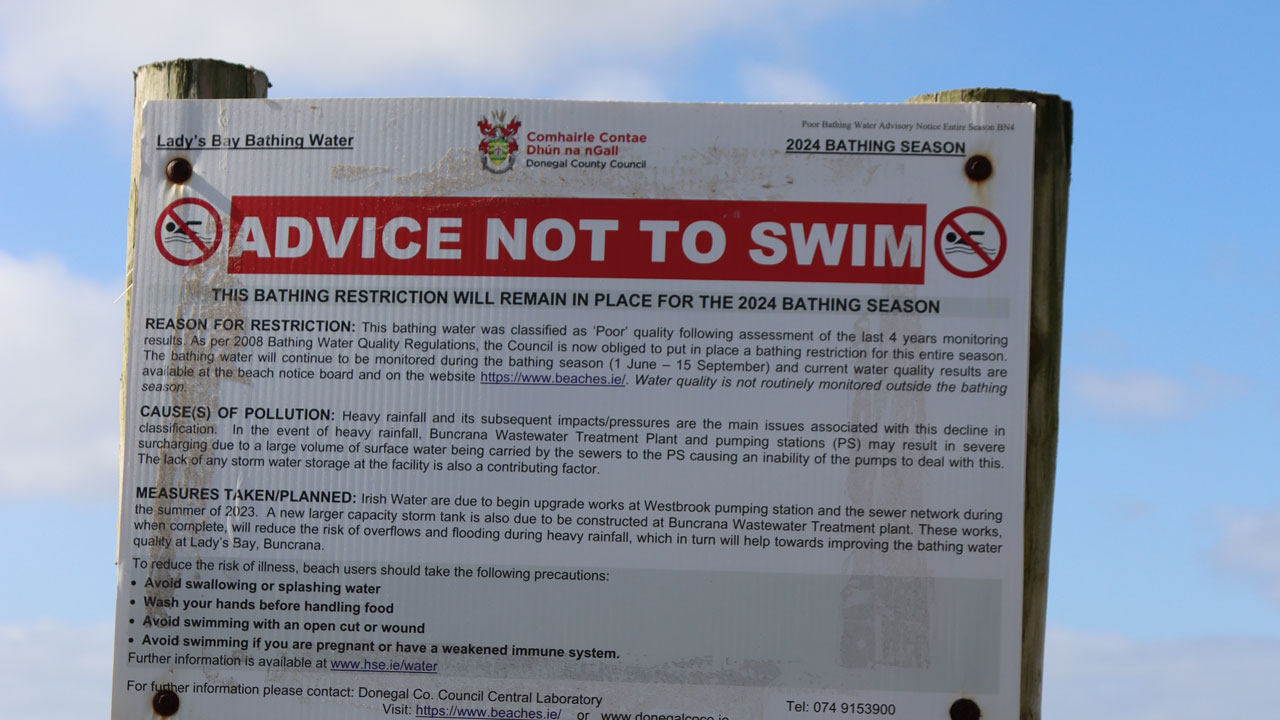
Ireland’s bathing water results are broadly positive, but headline classifications do not tell the full story about pollution risk, rainfall and public health.
Bathing season is back and it always brings a familiar sense of relief. Longer evenings, brighter weather and the pull of the sea, lakes and rivers remind us how deeply water is woven into Irish life. Across Ireland, people are returning to swimming spots – some for a quick dip or a sea-swim, some for kayaking, surfing or paddleboarding over the weekend, and some simply because being near water makes life feel a little lighter.
Every summer, Ireland’s bathing water headlines arrive with reassuring statistics. This year was no different. The overwhelming majority of Ireland’s designated bathing waters were classified as either “Excellent” or “Good”, with 98% meeting or exceeding the minimum required standard. That is positive news, and it reflects the fact that Ireland has many high-quality bathing waters and many dedicated people working to protect them.
But as bathing season begins, there is another question worth asking: So how clean is the water, really?
Most people understandably hear the word “Excellent” and assume it means the water is clean and safe whenever they choose to swim. But under the EU Bathing Water Directive, bathing water classifications are based on samples collected over a four-year assessment period. In practice, this means a beach can still retain an “Excellent” classification even if short-term pollution incidents occur during the year.
That distinction matters, especially for the person standing at the water’s edge on a warm day, wondering whether it is safe to get in.
SWAN’s analysis of publicly available Beaches.ie data found that almost half of Ireland’s monitored bathing waters experienced restrictions or warnings during 2025, largely linked to pollution risks after heavy rainfall. Even among sites classified as ‘Excellent’, 39% experienced temporary restrictions or warnings during the year. In other words, the overall classification can be reassuring while the day-to-day reality is more variable.
The EPA’s own findings point in the same direction. In 2025, bathing water warnings almost doubled compared with the previous year, increasing from 113 in 2024 to 205 in 2025. The EPA linked this increase to more frequent intense rainfall events during the bathing season.
These figures do not mean Ireland’s bathing waters are broadly unsafe. They do, however, remind us that water quality is not static. A beach that is usually clean can still be affected by pollution after heavy rain. A river that looks clear can still carry contamination. A sunny day does not tell us what has entered the water upstream, through a storm overflow, from a farmyard, from a misconnected pipe, or from runoff washed off roads and hard surfaces.
Heavy rainfall acts as a stress test for Ireland’s infrastructure, water and land management systems. Combined sewer systems can become overwhelmed, triggering sewage overflows into rivers and coastal waters. Polluted runoff from farmland can carry slurry, nutrients, sediment and faecal contamination into streams and estuaries. Urban runoff can wash oils, litter, animal waste and other contaminants from roads and hard surfaces into waterways. These pressures may begin far from a bathing spot, but they can end up where people are swimming, paddling and trying to enjoy the summer.
The EPA identified urban wastewater as the most common cause of bathing water incidents in 2025. Agricultural runoff, urban runoff and misconnections were also identified as significant pressures. Ireland’s wastewater infrastructure has struggled for years with capacity pressures, ageing systems and underinvestment.
The EPA’s advice to avoid swimming for 48 hours after heavy rain is sensible and important. People should check Beaches.ie and local signage before swimming, especially after rain. But it should also prompt a bigger question: why are people increasingly being asked to avoid entering Ireland’s waterways after rain?
That question becomes more urgent because the way people use water in Ireland has changed.
Sea swimming, surfing, kayaking and paddleboarding have grown rapidly in popularity, particularly since the pandemic. More people use waterways year-round, not just during the official bathing season. For many, these waters are part of their routine, friendships, mental health, sense of place and community.
Yet Ireland’s official bathing water framework still largely revolves around the designated bathing season. While some high-use locations may be monitored outside that period, the public warning and classification system is not always designed around year-round recreational use. People may therefore not receive the same level of timely, visible information about pollution risk outside the bathing season, even when autumn and winter rainfall can increase contamination risks.
This is not a criticism of the bathing water classifications themselves. It is an argument for greater transparency, clearer public communication about what those classifications do and do not represent, and stronger action to prevent pollution before it reaches our waterways.
Bathing water warnings are often the visible symptom of a wider problem. Faecal contamination can affect aquatic ecosystems, shellfish waters, biodiversity and downstream drinking water sources. Nutrient pollution from agriculture and wastewater can contribute to eutrophication and ecological decline. The question of whether water is clean enough to swim in is therefore connected to the wider health of Ireland’s rivers, lakes, estuaries and seas. We cannot keep treating pollution as something to respond to after it happens. The real solution is preventing it at source.
That means investing in wastewater treatment infrastructure capable of coping with more extreme weather. It means stronger measures to reduce agricultural runoff before it reaches rivers and estuaries. It means addressing pollution from septic tanks and private treatment systems. It means tackling urban runoff and misconnections. And it means improving public information systems for the growing number of people using waterways recreationally outside the traditional bathing season.
Ireland’s bathing waters are worth protecting because they are part of people’s lives: where children learn to swim, communities meet, people go for their mental and physical health, tourists encounter Ireland’s coastline, and wildlife depends on the same waters we do.
So as bathing season begins, the question is not simply whether a beach has an “Excellent” or “Good” classification. The question is whether people can trust that the water they enter is clean in real time.
Bathing season is back. The water may look clean. But if we want people to truly trust it and if we want rivers, lakes and coastal waters to recover and thrive, we have to look beyond the surface.
Clean water should not be a seasonal promise. It should be something people, communities and nature can rely on.