
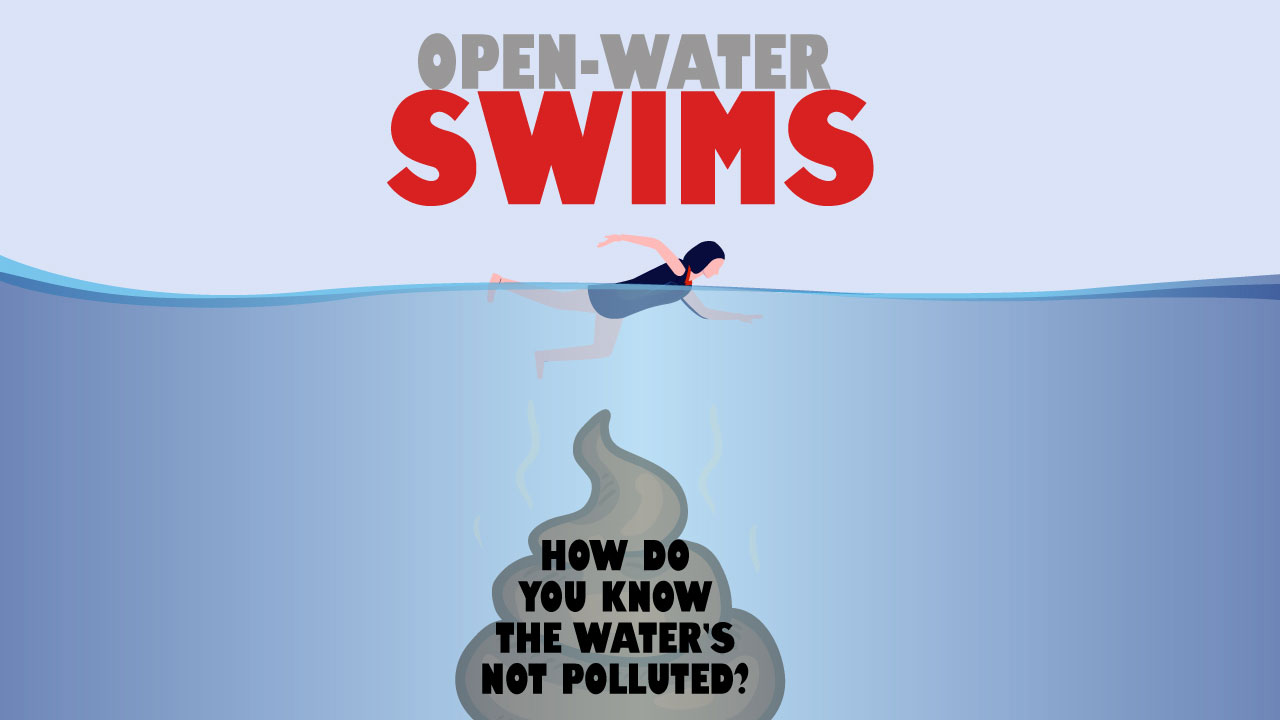
This time of year, we start thinking about getting back to or starting up healthy routines. Often it is a major part of our new year resolutions.
One that more people are choosing to add to their list is wild cold-water dips or swims. The list of health benefits associated with it are many including improving mood, increasing stress resilience and immune function, and positives for cardiovascular health.
Many who regularly brave the cold waters at this time of year (and even in our warmer months) are aware of the potential negative health effects such as shock, heart issues and hypothermia and therefore take the necessary precautions to prevent these.
However, not many consider water pollution as a health risk while swimming.
This is what you need to know:
What health risk does pollution pose?
Often water pollution is caused by poo from livestock, humans, or pets and wild animals that gets into the water mainly from agricultural runoff, sewage overflows, septic tanks etc. This poo has bacteria in it such as E. coli and enterococci.
In humans, E. coli and enterococci can cause various infections, including urinary tract, wound, and bloodstream infections, along with stomach flu symptoms like diarrhoea, stomach cramps, and nausea, and in some cases, a severe complication called haemolytic uremic syndrome (HUS) which can lead to kidney failure.
How polluted are Ireland’s swimming spots?
The pollution levels at swimming spots varies massively, with more dangers to health likely when pollution levels are high.
Annual EPA reports often show high percentages of “excellent” bathing waters in Ireland which the media highlight, and as a result, many people may presume they are unlikely to be swimming in polluted waters in Ireland. Last year’s report said that 80.8% of our bathing waters were classified as “excellent”, and while this sounds good for Ireland, the average in Europe is 85% so we’re below average.
However, even if you know your swimming spot was classified as “excellent” or “good” in recent years or it may even have had a blue flag, the beach can still get dangerously high levels of pollution.
So how can you tell if the water you swim in is polluted?
Many popular wild swimming spots, if designated as ‘bathing waters,’ are monitored for pollution but mostly only in the bathing season which officially runs from the 1st of June to the 15th of September in Ireland. During the season you can see the latest levels of pollution on the EPA run website beaches.ie.
What about out of season?
Most local authorities don’t monitor out of the bathing season so there is no way of knowing what the water quality is like then, but considering that the pollution is mainly coming from agricultural run-off and sewage overflows that get much worse with heavy rain, and heavy rain is much more frequent in the colder months, you can be sure your chances of swimming in pollution has gone up outside of the bathing season. The EPA warns that there is an increased risk of waterborne illness out of season.
If my beach is classified “excellent” or “good” does it mean it isn’t polluted?
On Beaches.ie you can also see the most recent water quality classification for your beach which can be Excellent, Good, Sufficient, or Poor. This classification is given by taking the samples gathered over four years and then using a statistical method to smooth out any anomalies, an “excellent” classification therefore doesn’t mean the water quality was always excellent in the last four years or that it will be that year.
In fact, for the 2025 bathing season, of the 122 bathing water sites classified as having ‘Excellent’ water quality, 47 (39%) had restrictions, such as swim bans, for 2 – 38 days, on account of pollution or the likelihood of pollution.
If you haven’t checked before going, what are the chances of going to a beach that gets polluted?
Of the 151 monitored bathing water sites, in Ireland, 71, nearly half, had restrictions in 2025. These ranged between 2 and 365 days. In fact, only 16 have had no restrictions between 2021 and 2024.
So, last year there was nearly a 50/50 chance that your swimming spot had some restriction, on account of pollution or its likelihood, at least once during the bathing season. And that’s if it was a registered bathing water and was therefore being monitored. Remember also that swimming outside the bathing season, when the chance of pollution goes up considerably, you wouldn’t even get a restriction notice, as the beach would likely not be monitored for pollution.
When a beach is polluted how much bacteria is there?
The amount of pollution varies but it can reach very high levels. Last year Balbriggan beach had samples that were 15 times the levels of E. coli that require a swim ban. It takes a couple of days for samples to be analysed, and samples only need to be taken a minimum of once a month, although many local authorities take samples more often than this. This means you can never be sure you’re not swimming in water polluted by bacteria from poo.
So, what can you do about it?
We certainly don’t want to put people off open swimming in the wild. Many of Ireland’s swimming spots have safe pollution levels most of the time. However, just like with other health risks, it is best for people to make informed decisions and take informed actions to prevent any health risks.
One possible effective action you could take is to not to go swimming 48 hours after heavy rain as there is a much higher chance that pollution has been flushed into the water then. This is recommended by the EPA.
However, this is only a short-term action that you shouldn’t need to take, and climate change is just making heavy rain more frequent.
What can you do long-term about it?
The action to take for a longer-term solution is to advocate for preventing these levels of water pollution altogether. We shouldn’t have to put up with pollution where we swim! The data on reported restrictions on beaches.ie for 2025 shows that most of the pollution comes from agriculture and sewage. This pollution is preventable, but the government is not doing enough to deal with the problem. SWAN has regular actions to put pressure on the government to do more. You can sign up to get our updates here.
If you are part of a dip group, a wild swimming club, or a water-sports group, remember that in many ways these are like your local grounds and they are being dumped on regularly. In fact, they are so much more than this, as they are the recreation place for many of us, including being playgrounds for our children. Furthermore, they are the homes and habitats of so much wonderful wildlife who rely on clean water to survive. Act to stop water pollution today.