
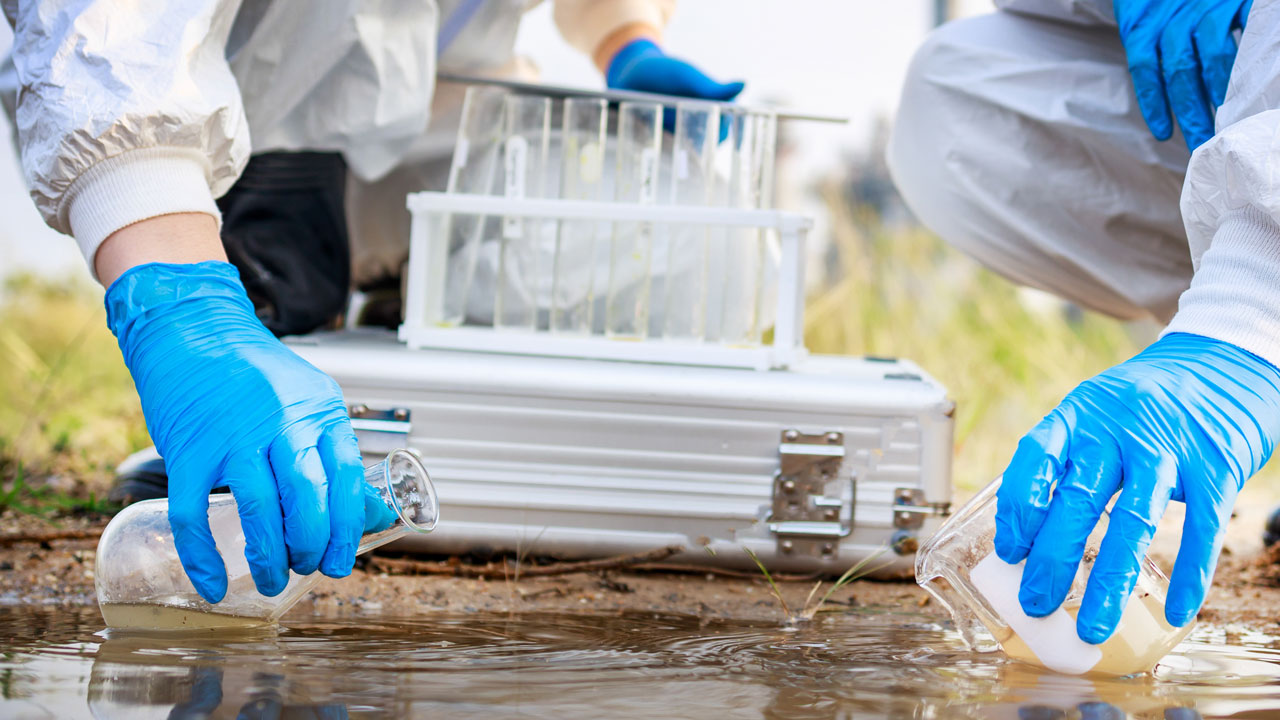
Almost one month ago today, one of Ireland’s worst ecological disasters unfolded on the River Blackwater in Cork – an estimated 50,000 fish—salmon, trout, eels, lamprey—were reported dead in a stretch of the River Blackwater in Cork.
At the time of writing, the cause is believed to be a chemical agent entering the river, but no definitive source has been formally identified [1].
This is not just about fish. The disaster has brought further devastating impacts on the river’s other wildlife, such as its otters, kingfishers, freshwater pearl mussels, and the wider ecosystem. In fact, much of the Blackwater is given special protection under EU law as a Special Area of Conservation (SAC) because of its important natural habitats and species.
Adding to this are the social and economic costs, which are significant and multifaceted, including impacts on local communities, livelihoods in angling and tourism, and recreation.
Not an isolated tragedy
Fish kills are not rare accidents—they’re a symptom of a system that consistently fails to protect our rivers.
Despite a drop from a peak in the 1980s, fish kills are still a year-round occurrence in Ireland, with Inland Fisheries Ireland recording 30 fish kills between January 2023 and July 2024, where an estimated 19,000 fish were killed [2]. In the month before the Blackwater fish kill alone, there were three reported fish kills around the country with around 3,300 deaths in total [3]. The main causes are agriculture (e.g., slurry and pesticide spills); industry and wastewater utility spills and discharges; and algal blooms caused by nutrient pollution.
What is clear is that the licensing, regulations, enforcement, penalties, and monitoring that are in place to prevent fish kills are not working.
Weak Licensing, Penalties and Deterrents
The issues with licensing have been highlighted by North Cork Creameries’ emptying of 362,000 litres of wastewater, with ammonia levels 30 times above the legal limit and orthophosphate levels two-and-a-half times above the limit, into the river during a ten-hour period on the night of the fish kill while holding an Industrial Emissions License for water emissions. (The EPA has since said they don’t believe this was the cause of the kill, but it underlines wider problems of oversight.).
However, it is when we look at the penalties imposed in recent years that we start to get a real sense of why potential polluters may not be deterred by the financial or custodial consequences of polluting our rivers.
When Dairygold in East Cork let 150 litres of toxic insecticide run into the River Kiltha, where it killed 20,000 fish, it faced several charges resulting in just a €12,000 fine in 2013 [4]. In the same year, its profits went up 33% to €27.3 million [5].
A more recent example is in 2022, when a farmer was convicted of causing a major fish kill on the Tracton River, which resulted in the deaths of 5,000 fish, by allowing effluent to discharge from a slurry tank in his farmyard. He was fined a mere €2000 plus costs [6]. Much higher fines would be a greater disincentive for farmers to ensure fewer end up causing future fish kills.
On wastewater utility discharges, in 2023, Uisce Eireann was fined just €4,000 plus costs for causing a fish kill on the Ballinagh River [7]. Ammonia levels were found to be 32 times the limit. It was the third such incident by Uisce Eireann on the stretch of water in less than a decade. Previous fines didn’t stop this from happening, so why would anyone believe this time it would? In July 2025, another fish kill happened on the river, with over 1,000 fish dead. Investigations are ongoing.
A more recent example is in June 2024, when Uisce Eireann was responsible for a fish kill in the River Allow, a tributary of the Munster Blackwater catchment, where a highly corrosive chemical leaked into the river and killed what is estimated to be tens of thousands of fish [8]. This time, they were charged just a €3,500 fine plus costs.
The maximum fine for a single charge in fish kill cases like this is just €5000 in the district court (fish kills are almost always taken in the district court). This is derisory and an insult to the public and nature when set against the scenes of death and devastation.
The fines are pocket change for a company like Uisce Eireann that handed out €10.6 million in bonuses last year [9]. However, taking large amounts of money from Uisce Eireann in fines is not a solution either. It is just taking money from the pot to fix the issues. We must have accountability, with the right processes and resources put in place to ensure similar incidents don’t happen again.
Pollution Every Single Day
Fish kills may make the headlines, but harmful pollution is entering our rivers every single day.
In 2023, Uisce Éireann alone had on average three “one-off incidents” every day, many of which resulted in raw sewage, uncontrolled discharges, and breaches of emission values [10]. These often don’t result in immediate mass fish deaths, but they still cause significant water quality decline and considerable damage to wildlife.
These wider polluting incidents from Uisce Eireann point to the bigger issue at stake here: that our fish and our wider water wildlife are being killed in huge quantities all the time, yes in one-off incidents, but generally more gradually, by the considerable amount of pollution and damage that is allowed to destroy our rivers, mainly from agriculture, forestry, sewage, channeling, drainage, and dredging. The government has the power and resources to stop this through robust policies, legislation, regulation, and enforcement, but it doesn’t.
Half of our rivers are reported to be ecologically unhealthy, as highlighted regularly by the EPA. For years now, consecutive governments have let the problem get worse. The public is failing to hold them to account for this.
We can’t let them get away with it.
So, after a large quantity of toxic pollution enters our already heavily polluted rivers, resulting in a major fish kill, we shouldn’t be shocked; we should be compelled more than ever to take action. Without public outcry, disasters like this will happen again, and our rivers will stay polluted and unhealthy or deteriorate even further. Raise your voice!
[3] https://www.rte.ie/news/ulster/2025/0807/1527266-cavan-lake-fish-kill/
[4] https://www.irishexaminer.com/news/arid-20228767.html
[5] https://www.farmersjournal.ie/agribusiness/companies/dairygold-profits-up-33-in-2013-156727
[6] https://www.fisheriesireland.ie/news/media-releases/farmer-convicted-of-causing-fish-kill
[8] https://www.irishexaminer.com/news/courtandcrime/arid-41537708.html
[9] https://www.rte.ie/news/business/2024/0628/1457173-uisce-eireann-bonus-payments/
[10] https://www.irishexaminer.com/news/arid-41458321.html